




Players around the world enjoy two of the most popular card games: blackjack and poker. The rules, methods of play, and odds of winning in both games are significantly different. However, both games use cards and elements of strategy. In this article, we will take a detailed look at the main differences between blackjack and poker to help you better understand the characteristics of each game, their strategies, and how these factors affect the odds of winning.
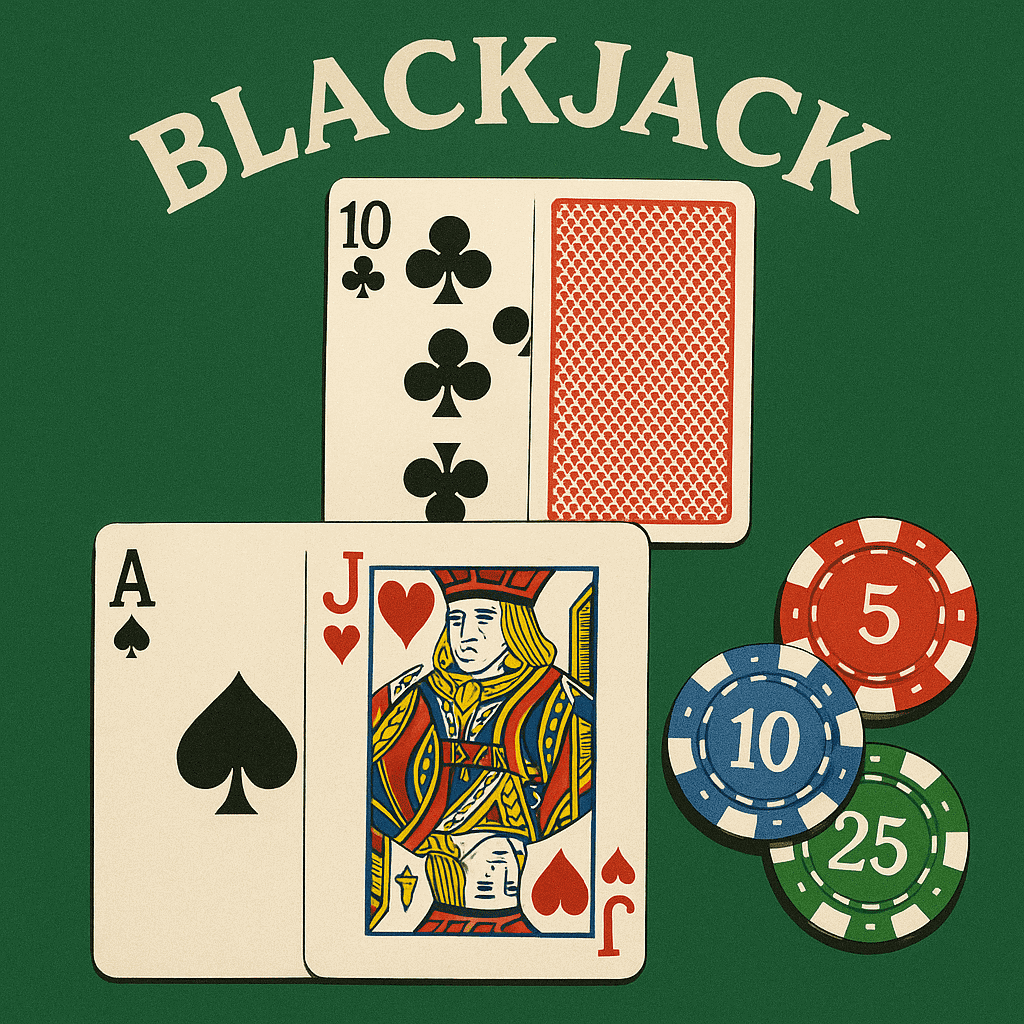
Blackjack Rules
The objective of blackjack is to get 21 points or as close to it as possible without going over. Each card has a different value. Cards with a face value of 2 to 10 are worth their face value, cards with a king, queen, or jack are worth 10 points, and an ace can be worth 1 or 11 points, depending on the situation.
Players can choose from several options:
- Hit — Take another card to get closer to 21 points is a hit.
- Stand — Stay at the current number of points and not take any cards.
- Double Down — Double the bet to get one additional card.
- Split — It is a way to divide two cards into two different sets and continue playing with each card separately if you have two identical cards.
The dealer is also required to take cards until the total is 17 points. A player loses if they get more than 21 points.
Poker Rules
The objective of poker is to collect the strongest combination of cards from the five cards you have in your hand or to win by betting and forcing all your opponents to fold their cards. Texas Hold’em is one of the most popular forms of poker. In it, each player receives two pocket cards, and five community cards are dealt face up on the table. To make their hand, players can use any five cards they have, including their pocket cards and the community cards.
The main stages of the game include:
- Preflop is the start of the first round of betting after the players have received their pocket cards.
- Flop is when three cards are dealt to the table.
- Turn is the fourth community card.
- River is the fifth community card.
After each stage, there is a betting round in which players can raise, lower, or fold their cards. In poker, winning depends on skillful use of bluffing and betting strategy.
Strategic Approach to the Game
Strategy is crucial for both games, as it allows players to minimize risks and increase their chances of winning. Although poker and blackjack require certain skills and knowledge, the approach to strategy in each game is very different. In the next section, we will take a closer look at how to build a strategy for these games to achieve the best results.

Blackjack strategy. Making the right decisions based on the cards in the player’s and dealer’s hands is a key element of strategy. The goal is to reduce the risk of going bust while getting a combination that is close to 21 points. To do this, there is a basic tactic that describes how to behave in different situations, such as when to take a card (Hit), stay (Stand), double the bet (Double Down), or split the cards (Split).
Improving your chances of winning also depends on bet management. Proper budget allocation and using bets based on the dealer’s card can significantly improve your results and reduce losses.
Poker strategy. In poker psychology, the ability to read your opponents and bluff, and much more, is important. Poker players often make decisions based not only on the strength of their cards but also on the behavior of other players, their bets, and potential reactions. A successful strategy depends on the ability to force opponents to fold or, conversely, to “mislead” them with bluffs.
Poker is a game in which players compete against each other, and the outcome of the game depends on how the players interact with each other. This distinguishes it from blackjack, because in blackjack, players play against the dealer, not against each other. Developing a strategy in poker requires a deep understanding of human psychology and the ability to adapt to changing game conditions.